Monday Musings: Student Centred Assessment

Happy Monday All!

I hope all you Canadian teachers are having a great family day, and my American friends a great Presidents Day! I have been thinking about the process of student centred assessment lately.

What are your processes of assessment in middle school? I am going to share my process of student centred assessment!

1- Formative Assessment (Based on the Specific Expectations of the Curriculum)

  • This is where the core bulk of your lessons are coming from. Consider the formative assessment like check ins, exit tickets, checks for understanding. I do NOT give grades for formative assessment- I simply give descriptive, written feedback 
  • Keep formative feedback ongoing and varied. I give students the chance to SELF ASSESS, PEER ASSESS and get TEACHER ASSESSMENT

2- Summative Assessment (Based on the Overall Expectations of the Curriculum ) 

  • This is at the end of the unit, or when I am ready to assess the overall expectation of everything that we have been learning so far!
  • The summative assessment is where I evaluate and give marks
  • Each summative project is based on an overall expectation in the curriculum
  • Each summative has a conversation component, an observation component and a product component. This is called triangulation of assessment 

I’ve attached an example rubric that I have used in grade 6 this year- please feel free to use it as a sample when creating your own assessment in your class!

Enjoy this little tid bit of learning! I hope it helps someone out there!

XX Ms. Goldenfairy
Comprehensive Math

Hello All!

I am currently taking an Additional Qualification Course in Mathematics- Part I for those of you that are interested. For my first learning experience we have a summative to write which could be a blog entry. Seeing as I actually have a little blog- I decided to take the opportunity to write a blog entry on the comprehensive math program.

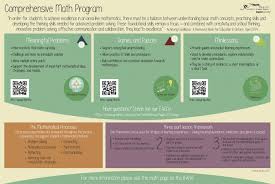
The Comprehensive Math Program is a math model that schools in Ontario, Canada follow. The school board that I work for has a great image that ties into their understanding of the comprehensive math program.

The Comprehensive Math Program

https://www.youtube.com/watch?v=SjmoqMpsrEA

This video outlines the key terms and items in a comprehensive math program- as outlined by my particular school board.

The major points of this math program includes the following:

1- Games and Reinforcing Activities

2- Meaningful Problems

3- Three Part Lessons (Minds On, Action, Consolidation)

4- Math Centres

Key Learnings from this learning experience:

  • Big Ideas are key. Big Ideas are important in thinking about and planning your math unit. Big ideas can chunk learning into manageable pieces for students. Students should be involved with the big ideas and be able to understand the big ideas.
  • Day, Unit, and Long Range Planning  are important. A constructivist approach (basically the school of thought that students are blank slates and can ‘construct’ their own knowledge through meaningful problems)
  • Thoughtful and Clear Planning allows us teachers to be ready and prepared for what the math block may be like. Understanding is important and should be placed with high importance. That is true for teacher understanding as well.
  • Cross Curricular Planning is a great opportunity to be able to bridge concepts from different subjects together, and allow students the opportunities to practice their concepts and understandings through math.
An example of a math game you can incorporate into your math block

Finally,

I hope the pictures, and videos really helped your beginning understanding of what a solid comprehension math program may look like in your middle school block!

Bye for now

Ms. Goldenfairy

Report Card Comments..

Hi friends!

It’s that time of year again..at least in Ontario- for REPORT cards. For many in my school board we have a P.A. Day this Friday to write our sometimes ‘dreaded’ report cards! I’ve been getting a few questions lately around how I organize myself and write out each report card. My learning skills portion are very detailed- I ALWAYS max out my space. At the end of this post, I have an example of a Learning Skills comment I wrote for Term 1! I hope you find this helpful in some way!

This is a copy of the “LEARNING SKILLS” portion of the Ontario Report Card

My Report Writing Plan:

I always ‘backwards’ plan my report writing from when they are due. The deadlines will depend on your individual school but for example purposes I said they are due Feb 1

Reports are due – February 1

Start writing: January 1st

  • Each day I do ONE learning skill (it also gives me a buffer time in case I miss a few days of writing)
  • I write 1/4 of each subject reports everyday which means that I will have done all my reports by January 26
  • January 26 I edit all my reports, and ensure that they are all inputted correctly!

LEARNING SKILLS EXAMPLE

NAME has had a great first Term in our class. He/She is working on staying on top of his tasks and responsibilities in class. NAME needs to manage time and workload to meet agreed upon timelines. He/She is encouraged to use his/her agenda to ensure that classwork is regularly being completed. NAME displays organization skills by bringing his/her materials in from his/her locker on a regular basis. He/She is encouraged to seek extra help from teachers whenever needed, and reflect on his/her organizational skills daily by checking that he/she has put all materials away in the proper duotangs at the end of each day. He/She has begun to date and title his/her work for easier access during study periods. NAME  would benefit from using an organizational tool (i.e. an agenda) to complete tasks according to suggested timelines. NAME is beginning to use class time well, and has begun to get started on his work as soon as he/she gets it. He/She is encouraged to stay focused on his/her tasks throughout the entire assignment, and limit distractions around him/her (i.e. peers). NAME is encouraged to persist when he/she encounters challenges. NAME is able to collaborate with his/her friends during social studies or science assignments. At times, he struggles to collaborate on tasks that he/she is not as familiar with. He/she is encouraged to try and divide up various tasks from a group project, and complete his/her specific tasks to contribute to the completion of the overall group assignment. NAME has made some gains with his/her initiative development this term. He/She demonstrates a curiosity in his/her learning. He/She is interested in science and often seeks out different activities that he can complete in science. At times, Umair will sit and wait for a teacher to tell him/her his/her next step with assignments. He/She is encouraged to remember where work for feedback should be handed in to, as well as check success criteria and checklists to reflect on tasks, and ensure that his tasks are fully completed. NAME works best with an adult standing or sitting beside him/her. He/She is encouraged to continue to develop independence with his tasks. With some prompting, NAME has volunteered for our Frozen Yogurt selling initiative outside of class. He/She is encouraged to take risks in volunteering and class discussions. He/She can do this by volunteering for extra curricular initiatives outside of the classroom. NAME has made gains with his/her self regulation skills this term. He/She is beginning to use self-assessment to analyse and improve work. At times, NAME needs reminders to stay on task, and not distract his/her peers during work periods. He/She is encouraged to find an appropriate or quiet space to complete tasks. I wish NAME all the best for Term 2!

Featured

Monday Musings: Middle School Literacy Block

Hi Friends!

When I started teaching the sixth grade I remember feeling anxious about how my Literacy Block would look like. In my board- we are to have 100 minutes of Literacy and Math per day. I was a little nervous trying to navigate how this would look at a Junior level. All I knew was the Primary Daily 5.

After consulting with collegues, peers, the beautiful blogs that so many of us post, and ultimately- trial and error with students- I came up with this working document of what my literacy block looks like.

Photo by anouar olh on Pexels.com

I have to say- so far- I’m in year two of Grade 6- it works! I’ve tweaked it along the way, but over all I really like the process we’ve got going in our class.

100 Minute Literacy Block (Middle School)

10 minutes- Independent Reading. During this time I conference with students and work on ‘conversation’ questions for summative assessments- more on triangulation of assessment later. I swap this out for read alouds twice per week

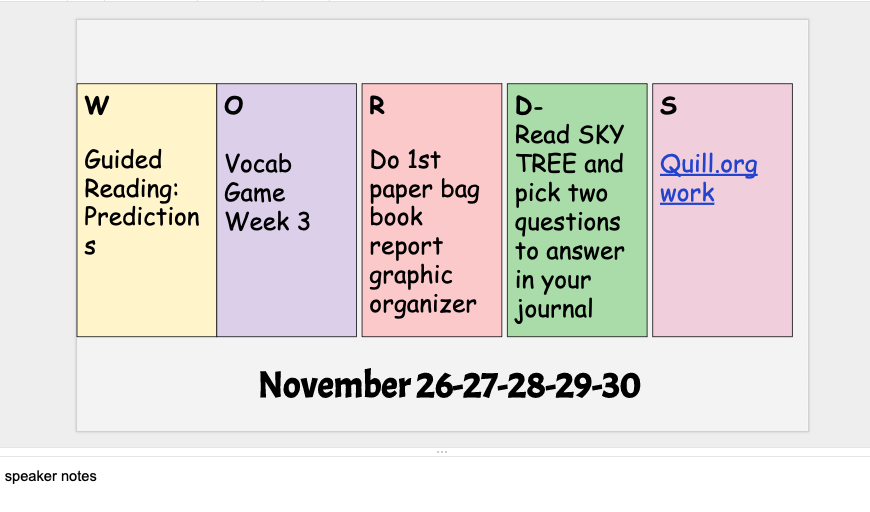
30 minutes- WORDS groups- Literacy rotations. Here is where I do my “Guided Reading” or “Guided Writing” time. I have five focused groups – based on scores and levels for this one, in which I meet with ONCE per week. We focus on a reading comprehension strategy, or writing strategy- based on what we are focusing in reading or writing during that week.

I have the acronym WORDS because I love puns. I make a slideshow for the week and display this with a timer in the class so everyone knows exactly what they are to be doing at this time. I will blog about the accountability of this process at a later date.

*All the above are connected to specific expectations (Or standards for those who use them)*

30 minutes Mini Reading Lesson (Shared, Modelled or Independent)

Here is where I do specific and focused reading lessons, and students have the opportunity to engage in modelled, shared (partner work) and independent work based on the standard and lesson covered. My units are all arranged with a modelled lesson, shared lesson, and indepdenent lesson per concept being discussed.

30 minutes Mini Writing Lesson (Shared, Modelled or Independent)

Here is where I do specific and focused writing lessons, and students have the opportunity to engage in modelled, shared (partner work) and independent work based on the standard and lesson covered.

That’s my literacy day! In our district of Ontario, Canada we have Oral and Media Literacy which I often incorporate into my WORDS groups.

I hope this was a helpful post! I remember really scouring the internet for ideas when I was starting out.

Until next time,

Ms. Goldenfairy