Comprehensive Math

Hello All!

I am currently taking an Additional Qualification Course in Mathematics- Part I for those of you that are interested. For my first learning experience we have a summative to write which could be a blog entry. Seeing as I actually have a little blog- I decided to take the opportunity to write a blog entry on the comprehensive math program.

The Comprehensive Math Program is a math model that schools in Ontario, Canada follow. The school board that I work for has a great image that ties into their understanding of the comprehensive math program.
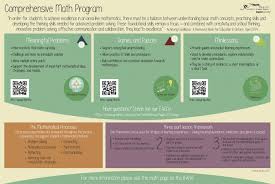
The Comprehensive Math Program

https://www.youtube.com/watch?v=SjmoqMpsrEA

This video outlines the key terms and items in a comprehensive math program- as outlined by my particular school board.

The major points of this math program includes the following:

1- Games and Reinforcing Activities

2- Meaningful Problems

3- Three Part Lessons (Minds On, Action, Consolidation)

4- Math Centres

Key Learnings from this learning experience:

  • Big Ideas are key. Big Ideas are important in thinking about and planning your math unit. Big ideas can chunk learning into manageable pieces for students. Students should be involved with the big ideas and be able to understand the big ideas.
  • Day, Unit, and Long Range Planning  are important. A constructivist approach (basically the school of thought that students are blank slates and can ‘construct’ their own knowledge through meaningful problems)
  • Thoughtful and Clear Planning allows us teachers to be ready and prepared for what the math block may be like. Understanding is important and should be placed with high importance. That is true for teacher understanding as well.
  • Cross Curricular Planning is a great opportunity to be able to bridge concepts from different subjects together, and allow students the opportunities to practice their concepts and understandings through math.
An example of a math game you can incorporate into your math block

Finally,

I hope the pictures, and videos really helped your beginning understanding of what a solid comprehension math program may look like in your middle school block!

Bye for now

Ms. Goldenfairy

Featured

Monday Musings: Middle School Literacy Block

Hi Friends!

When I started teaching the sixth grade I remember feeling anxious about how my Literacy Block would look like. In my board- we are to have 100 minutes of Literacy and Math per day. I was a little nervous trying to navigate how this would look at a Junior level. All I knew was the Primary Daily 5.

After consulting with collegues, peers, the beautiful blogs that so many of us post, and ultimately- trial and error with students- I came up with this working document of what my literacy block looks like.

Photo by anouar olh on Pexels.com

I have to say- so far- I’m in year two of Grade 6- it works! I’ve tweaked it along the way, but over all I really like the process we’ve got going in our class.

100 Minute Literacy Block (Middle School)

10 minutes- Independent Reading. During this time I conference with students and work on ‘conversation’ questions for summative assessments- more on triangulation of assessment later. I swap this out for read alouds twice per week

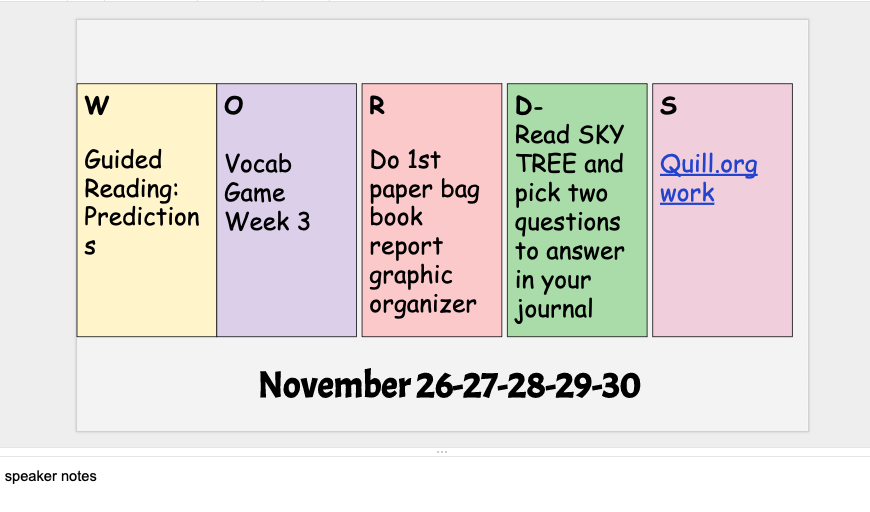
30 minutes- WORDS groups- Literacy rotations. Here is where I do my “Guided Reading” or “Guided Writing” time. I have five focused groups – based on scores and levels for this one, in which I meet with ONCE per week. We focus on a reading comprehension strategy, or writing strategy- based on what we are focusing in reading or writing during that week.

I have the acronym WORDS because I love puns. I make a slideshow for the week and display this with a timer in the class so everyone knows exactly what they are to be doing at this time. I will blog about the accountability of this process at a later date.

*All the above are connected to specific expectations (Or standards for those who use them)*

30 minutes Mini Reading Lesson (Shared, Modelled or Independent)

Here is where I do specific and focused reading lessons, and students have the opportunity to engage in modelled, shared (partner work) and independent work based on the standard and lesson covered. My units are all arranged with a modelled lesson, shared lesson, and indepdenent lesson per concept being discussed.

30 minutes Mini Writing Lesson (Shared, Modelled or Independent)

Here is where I do specific and focused writing lessons, and students have the opportunity to engage in modelled, shared (partner work) and independent work based on the standard and lesson covered.

That’s my literacy day! In our district of Ontario, Canada we have Oral and Media Literacy which I often incorporate into my WORDS groups.

I hope this was a helpful post! I remember really scouring the internet for ideas when I was starting out.

Until next time,

Ms. Goldenfairy